How 30 Children with Chime Bars Can Sound Amazing!
Let me explain…
If you’ve got a set of chime bars (or xylophones, or glockenspiels!) from C to C, here’s a little musical magic:
Take out the F and the B bars. That’s it!
Now, whatever your children play will sound wonderful together – no clashes, no wrong notes, just instant harmony.
Why? Because you’ve just created the pentatonic scale – a special set of notes that always sound great in any combination. (Don’t worry if that sounds technical – you don’t need to be musical to make it work!)
This simple idea means every child can join in confidently, experiment with sound, and create real music together.
At Active Music, we’ve got loads of songs and activities using just these notes – perfect for singing, playing, and building musical confidence in your classroom.
Sometimes, music made simple is exactly what you need!
https://activemusicdigital.co.uk/wp-content/uploads/2016/12/activelogo1-1030x229.png00erik wagterhttps://activemusicdigital.co.uk/wp-content/uploads/2016/12/activelogo1-1030x229.pngerik wagter2025-11-25 10:05:522025-11-25 10:05:53How 30 Children with Chime Bars Can Sound Amazing!
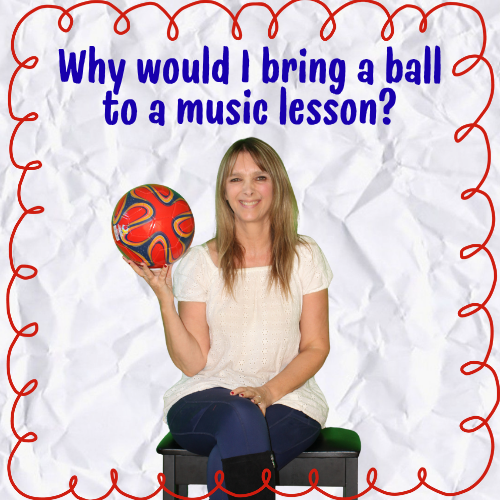
If you walked past my classroom and saw a group of children bouncing, throwing, and catching balls, you might think PE had taken over music time. But don’t be fooled – this is rhythm in motion!
Because wherever there’s pulse, there’s a place for a ball.
The Beat You Can Feel
Music is physical. Before children can understand rhythm or note values, they need to feel pulse – that steady, heartbeat-like foundation of all music. A ball is the perfect tool for this!
Bounce to the beat of a song – on your own, back and forth with a partner, or even around a circle. It’s instant, active, and gives every child something to do with the beat, not just hear it. Suddenly, pulse isn’t abstract. It’s alive in their hands.
Musical Games that Stick
Balls open up endless musical game ideas that blend learning with laughter.
Try:
“We Will Copy You” – Rolling a ball to a child of your choosing, who, in turns chooses actions for the whole class to copy.
“Hot Potato” – Bouncing the ball around the circle to the pulse of the song. When the word ‘rid’ comes up, the child with the ball, throws it across the circle to a new child, who will then continue bouncing the ball around the circle.
All chants – With these, the children can bounce a ball to the pulse while they chant out loud – or bounce the ball back and forth with a partner.
All of these get everyone moving, listening, laughing, and learning – all without a worksheet in sight!
Why It Works
Movement anchors music learning in the body. The ball is a bridge between sound and motion, and between children’s play and purposeful learning. It encourages teamwork, focus, and coordination, while making rhythm practice irresistibly fun.
And honestly, when was the last time you saw a child not want to join in when a ball appears?
Active Music
At Active Music we focus a lot on experiencing the pulse and there is no better way than within a game. Balls can be brought in to emphasise pulse in heaps of the lessons.
Because when music moves, children move with it – and that’s when they have the experience. Later we turn that experience into a teaching moment, where they learn what the pulse is and why it is important.
https://activemusicdigital.co.uk/wp-content/uploads/2016/12/activelogo1-1030x229.png00Sally Wagterhttps://activemusicdigital.co.uk/wp-content/uploads/2016/12/activelogo1-1030x229.pngSally Wagter2025-10-07 15:49:442025-10-07 15:49:44Why would I bring a ball to a music lesson?